
A startup is a sensible dream only if you are disciplined. Else, it is just a pomp-show of micro-managing work and effort which makes no sense.
I’ve been a business enthusiast for over a decade now. While I’m not the best, it is super safe to say that I can spot trends early-on.
A decade ago, it was venture capital and private equity for e-commerce, then it transitioned to drop-shipping to media production and now, it is moving towards venture studio and short-term founder residencies.
Bharat grew from calling every service aggregator the next big thing to recognising space-tech, Gen-AI and other frontier technologies as the future.
Now, all of this is great. But, are start-ups really succeeding? Maybe, maybe-not.
For any startup to succeed, it needs three things:
- A validated problem statement
- An in-flow of customer interest if not paying customers
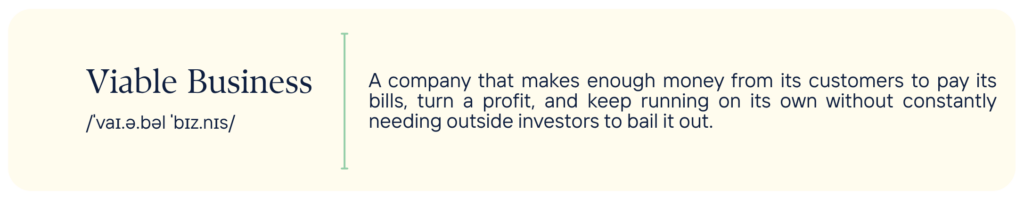
- And at some-point, a clear vision of how will the company maintain required minimum balance in their account without its investors and IPO.
I think most startups can still not be considered as a viable business in nature. And, in most cases, the founders are sure of it too.
For most, the startup journey is an avenue of fame. For some, it is a validation of their capabilities (practical resume basically). For others, it is just a thrill.
Now, I don’t think there’s anything inherently wrong with these motivations. Everyone has their java and their reasons to pursue the startup dream.
But, somewhere along the way, it seems we’ve lost track. We, now, confuse the act of starting-up with the act of building a business.
We’ve created an entire ecosystem around entrepreneurship. Incubators, accelerators, venture studios, founder residencies, pitch competitions, networking events and whatnot.
All of them exist, at least in principle, to help people build successful businesses. But, just end-up becoming another co-working space.
I built an incubator myself. And, I am aware of the damages, I’m responsible for, to the eco-system than the good I’ve done.
But here’s what bothers me.
Are we actually helping people build better businesses, or are we simply making it easier for more people to call themselves founders?
Because the two are very different things.
You can spend six months in a founder residency, raise a few lakhs in grants, participate in a dozen pitch competitions, get featured in newspapers and still have absolutely no idea whether your solution solves a validated problem or if a customer is willing to pay for what you’re building.
And that’s a genuine problem.
Not because every startup must make money from day one. That’s an unreasonable expectation, especially in deep-tech, where years of research and development may precede commercialisation.
But because every startup must eventually confront the most uncomfortable yet super sensible questions.
A. Are you really solving a problem or are you inventing a problem around a solution that seems sensible to you?
B. Who needs what you’re building, and why would they pay for it?
I think we’ve become remarkably good at teaching people how to pitch an idea. But I’m not entirely convinced we’ve become equally good at teaching them how to question one.
And perhaps that’s where the problem begins.